Sitting jobs for long hours, lack of exercise, the bedtime use of electronic gazettes, and a constant buzzing of notifications. Our good night’s sleep is not good anymore. The majority of us suffer and don’t get a good night’s sleep. Many people remain awake for hours in discomfort or their minds are wandering elsewhere.
A restful night’s sleep is crucial for overall physical and mental well-being, and yoga can be a powerful tool to help you unwind and prepare your body and mind ensuring a good night’s sleep.
A 2012 survey by the National Center of Complementary and Integrative Health found that 55% of yoga users reported improved sleep.
Let us learn about 5 yoga aasanas which can ensure that you get a restful and sound sleep. But, these bedtime yoga postures must be done 2 hours after dinner. So, there should be a gap of 2 hours between bedtime and dinner. Do not perform these pose immediately after finishing dinner.
Vajrasana
Vajrasana is a meditative posture. It promotes mental calmness and relaxation and also helps reduce stress and anxiety. It stimulates digestive organs and improves blood circulation in the abdominal region. As the blood flow is directed to your stomach and intestines it improves digestion. Given the strong connection between the digestive system and the nervous system, this mental relaxation can further enhance digestive efficiency.
Sit in Vajrasana for 5-10 minutes.
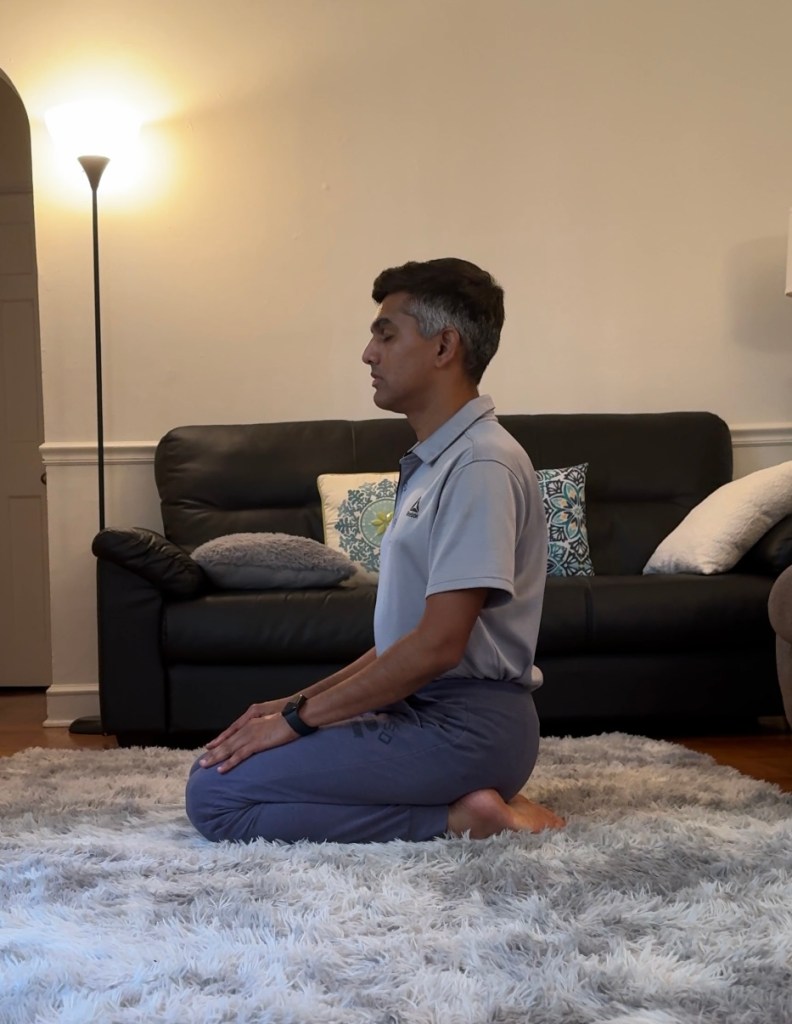
How to do Vajrasana?
Sit on the mat or bed. Back straight, legs stretched out in the front, palms resting on the side of your hips, and fingers forward.
Fold the right leg from the knee and place the foot under the right buttock. Similarly, fold the left leg and place the foot under the left buttock.
Make sure that the big toes are touching each other. Position the buttocks between the space of the heels and feet. Your thighs are comfortably resting on the calves.
Place your palms on the knees facing down, and keep the back straight. Now close your eyes and concentrate on your breathing. Relax the body and mind. In this position, your head and neck are in a straight line.
While releasing the aasan, slightly shift on the right side take the left leg out and then take the right leg out.
Those who cannot sit in Vajrasana can sit in Sukhasana (folded legs position). People with knee and ankle injuries should not do it.
Balasana (Child pose)
According to the Harvard Health blog, Balasana or practising Child pose also helps in a good night’s rest. Balasana is an excellent posture for calming the mind and reducing stress and anxiety. Deep and slow breathing helps calm the mind. It also gives a gentle stretch to the back, shoulders, and spine muscles, helping to relieve tension and stiffness. If your mind is calm, you can have a sound sleep.
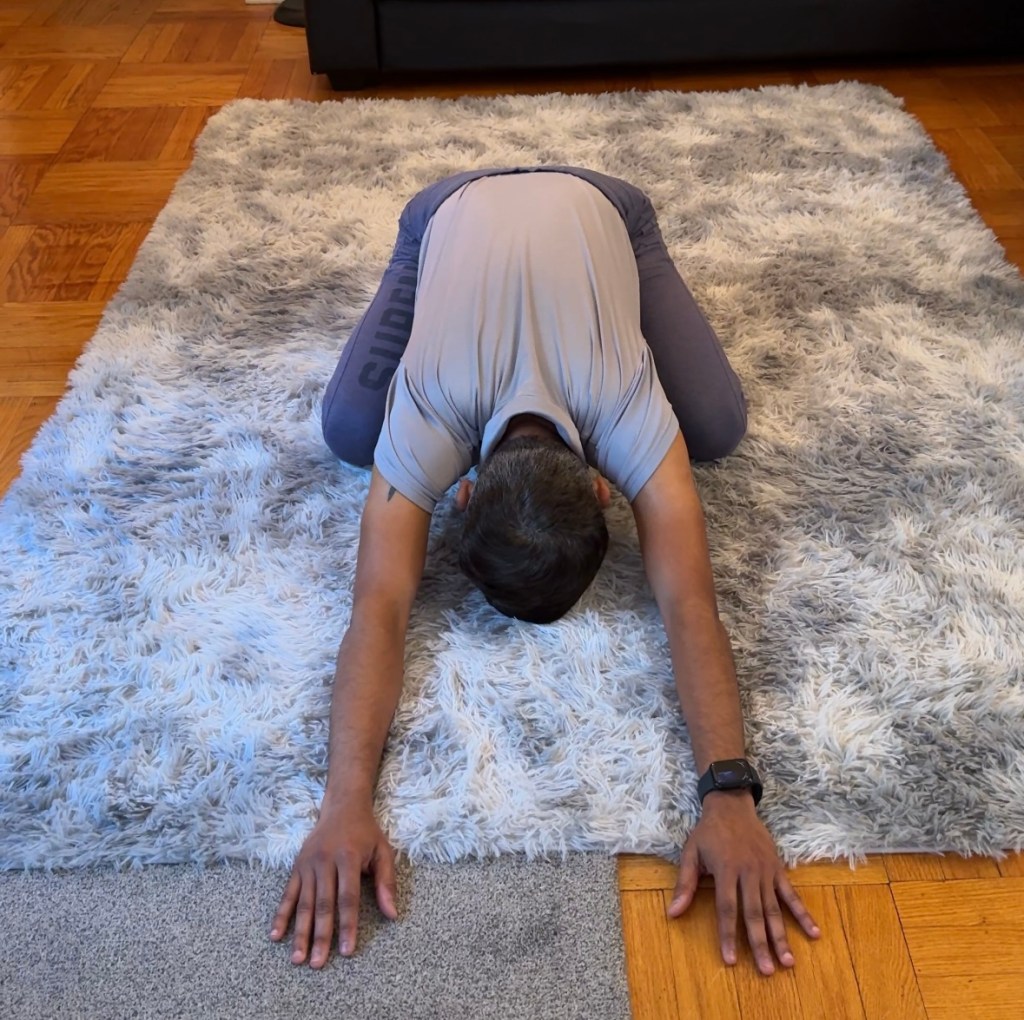
How to perform Balasana?
Kneel down on the floor with the toes of the feet together and knees hip-width apart. Rest your palms on the thighs and buttocks placed on the heels.
Exhaling forward lower your torso between the knees. Extend your arms straight in the forward direction with your torso, palms facing down.
Keep your head on the ground and rest in the position as comfortably as you can.
((This is a forward bending pose. People with heart issues or high blood pressure should avoid it. Also people with spine, ankle or knee injuries should not do it))
Yastikasana (Stick pose)
Yastikasana is a simple yet very effective yoga posture to relax your whole body. It stretches the spine relieving tension and stiffness in the back and promoting relaxation. Several times muscle tightness causes discomfort in sleeping. This yoga posture gives relief to muscles.
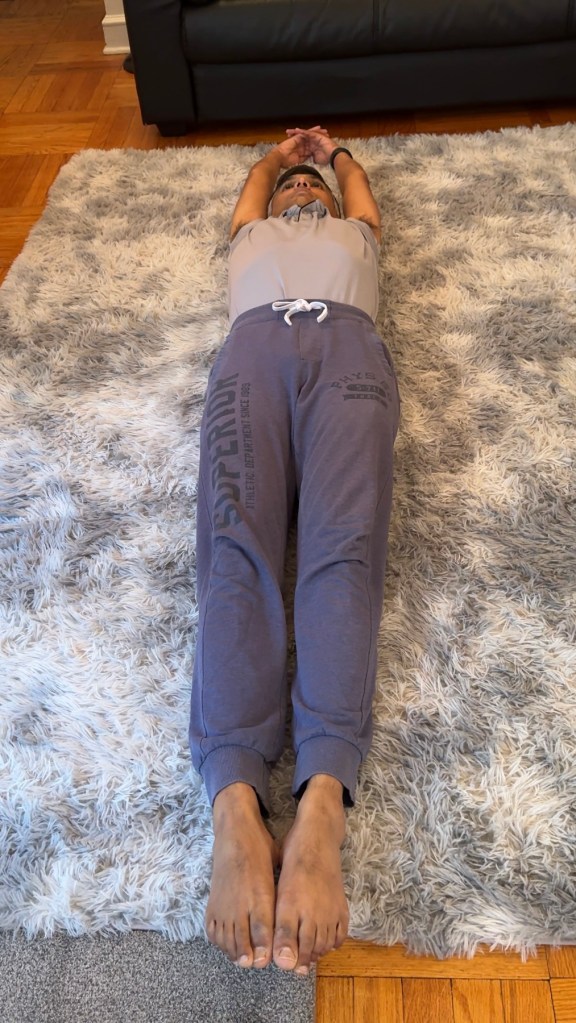
How to do it?
Lie down on your back on the mat or bed. Legs are straight and extended with arms on the side of the body.
Inhale, extend your arms overhead and stretch them as far as possible. Elbows should be straight and arms should be in line with the ears.
Simultaneously, point your toes, legs should remain straight and together. Feel the upper body getting pulled upwards and the lower body is pulled downwards.
Stretch the whole body and take slow and deep breaths. Stay in the final position for 5 breaths. Then relax your body and repeat this again.
Viparit Karni
Viparit Karni is also known as the ‘Legs up the wall pose’. This aasan can be performed by taking wall support or on the bed without wall support.
During the day as we stand our legs get tired. The blood flows downwards. In Viparit Karni, the blood flows towards the upper body. This helps to reduce swelling and tiredness in the legs by reversing the effects of gravity. It calms the nervous system and helps to reduce stress and anxiety. It can also help to alleviate varicose veins and other circulatory issues.
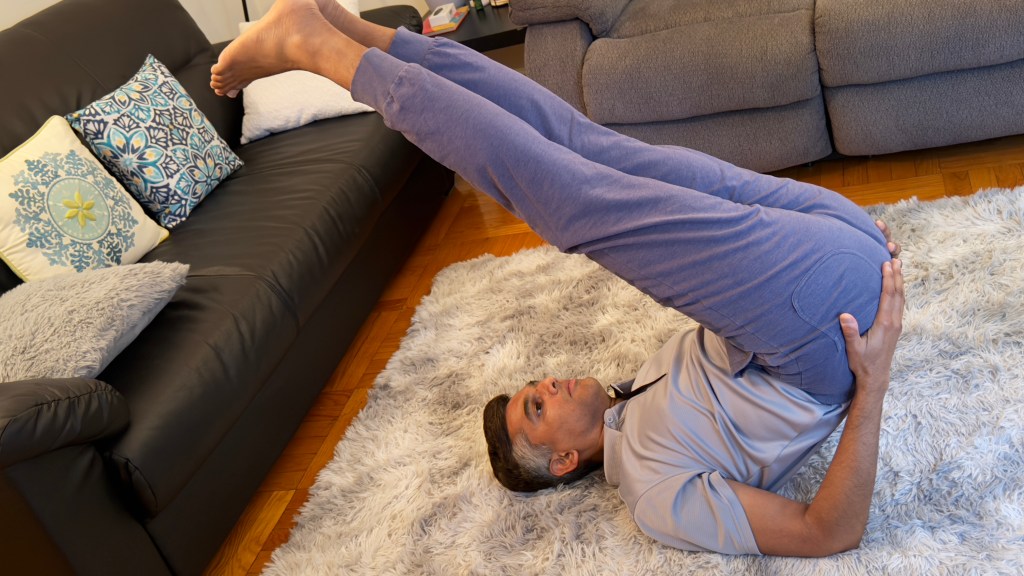
To begin practising Viparit Karani, on the bed
First, lie down on the mat or bed on your back hands on the side.
Inhale fully and while exhaling lift the legs with the support of your palms. Don’t give a jerk. Tilt the legs slightly over the head and hold the back for support.
Stay in the position as comfortable as you feel. Inhale and slowly bring your hips to the ground and then the legs and relax.
How to do it with the wall support
Sit sideways next to a wall, knees bent and feet on the floor. Slowly lie down on your back, and take your legs up against the wall. Bring your buttocks as close to the wall as possible, and extend your legs straight up.
Place your arms on the abdomen and rest the head on the floor.
Take the support of a towel or a pillow under your lower back if needed.
((People with high blood pressure, heart aliments, and weak eyes should avoid doing this aasan. During menstruation, it should not be done. If you have been operated recently do not perform this ))
Supta Bhadrasana
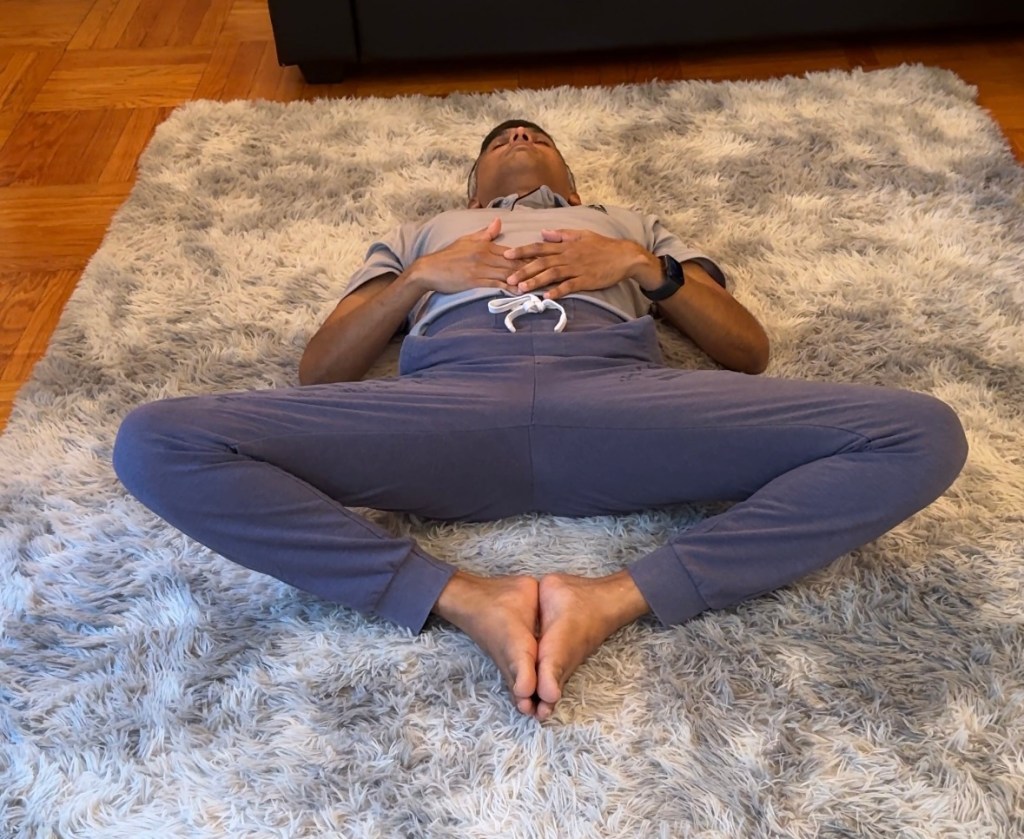
This aasan helps calm the mind reducing stress and tension. It also helps improve flexibility and enhance overall well-being. Alleviate tension in the lower back, providing relief from discomfort and stiffness. This pose opens the hips and stretches the thigh muscles.
How to do it?
Lie down on the mat or the bed on your back.
Bend the knees, bring the soles together, and let the knees fall sideways. Push the knees downwards with your hands. This will give you a good stretch on the thighs.
Put your hands on the stomach and relax. Breath normally.
Finally, lie down in Shavasana.
((This blog is based on my practice of Yoga. Please talk to your yoga teacher before attempting this))
 Mayank Bhagwat