From the dinner table, most of us head straight to the couch. don’t we? This regular practice eventually leads to weight gain and bloating. But did you know that a simple yoga posture can help digestion post-meal?
Some of you might wonder, how can one practice yoga aasan after eating. You are absolutely right. Yoga asanas are meant to be done empty stomach. However, ‘Vajrasana’ is one yoga posture that can be practised post-dinner and has immense health benefits.
Let us understand the steps of practising ‘Vajrasana’ and how it aids digestion post-dinner.
Steps of practising ‘Vajrasana’
Vajrasana, commonly known as ‘Thunderbolt Pose or Diamond Pose. It is a foundational yoga posture that offers many health benefits, particularly for digestion. Unlike many other yoga asanas, Vajrasana is unique in that it can be practised immediately after meals.
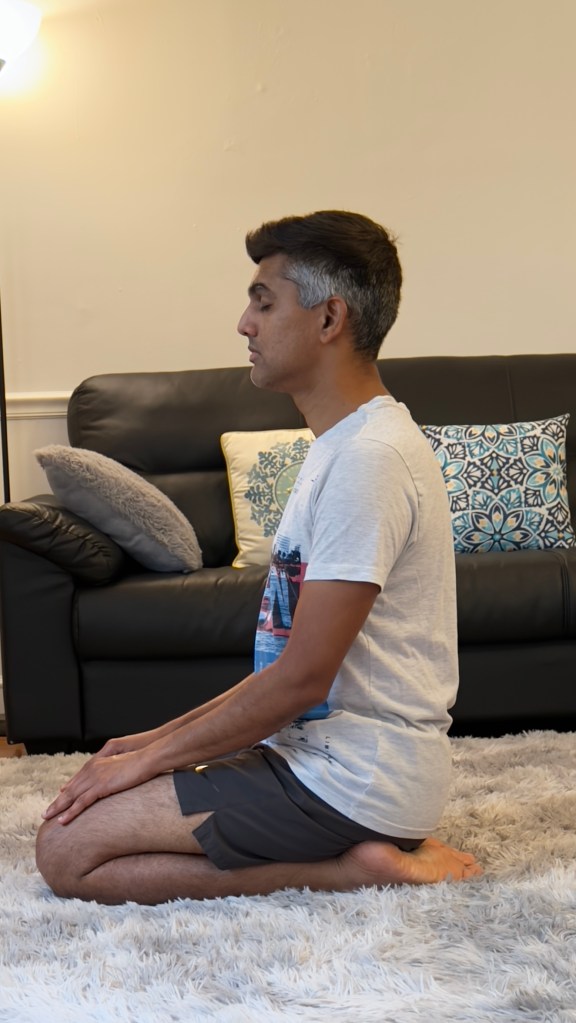
Sit on the mat or bed. Back straight, legs stretched out in the front, palms resting on the side of your hips, and fingers forward.
Fold the right leg from the knee and place the foot under the right buttock. Similarly, fold the left leg and place the foot under the left buttock.
Make sure that the big toes are touching each other.
Position the buttocks between the space of the heels and feet. Your thighs are comfortably resting on the calves.
Place your palms on the knees facing down, and keep the back straight.
Now close your eyes and concentrate on your breathing. Relax the body and mind.
Stay in the final position for 5-10 minutes. In this position your head and neck are in the straight line.
While releasing the aasan, slightly shift on the right side take the left leg out and then take the right leg out.
Benefits of ‘Vajrasana’
Health experts say that a 10-minute walk after a meal helps with digestion and controls blood sugar levels. Similarly, ‘Vajrasana’ also aids digestion. While it might not be feasible for everyone to practice ‘Vajrasana’ after lunch, it can be easily practised post-dinner.
Aids Digestion:
Vajrasana is recommended after meals because of its significant impact on digestion. This pose helps stimulate the digestive organs, enhancing their efficiency. When you sit in this position, the blood flow is directed to your stomach and intestines thus it improves digestion.
Improves Blood circulation:
Improves blood circulation in the abdominal region. This ensures that the essential nutrients are effectively absorbed. It also aids in detoxifying the body, as it facilitates the removal of waste products,
Bloating and Gas issues are reduced
Practising Vajrasana can help alleviate bloating and gas. Gases that are trapped inside the stomach and intestine are expelled providing relief from discomfort. It also helps in regulating bowel movements, thus preventing constipation. Additionally, it can help prevent acid reflux and indigestion, common issues faced after meals
Mental Health
Vajrasana is a meditative posture and is known for promoting mental calmness and relaxation. This can help reduce stress and anxiety. Given the strong connection between the digestive system and the nervous system, this mental relaxation can further enhance digestive efficiency
Relieves lower back discomfort
During the day we mostly spend a long time sitting at a working table. Practising Vajrasana can help relieve lower back discomfort. The thighs, calves and lower back muscles are engaged and toned during this pose.
Who should avoid doing ‘Vajrasana’
While practising ‘Vajrasana’ knees and ankles are engaged. Those who are suffering from keen ankle injuries should not practice this aasan.
So, if you include Vajrasana into your daily routine, especially after meals, can yield significant benefits for your digestive health and overall well-being. It is a simple and very effective yoga posture for practitioners of all levels. So, the next time you finish a meal, take a few minutes to sit in Vajrasana and experience the remarkable benefits it offers.
 Mayank Bhagwat