‘Kapalbhati’ is one of the techniques of shatkarma (body cleansing technique in yoga). It’s a popular technique among yoga practitioners. In the Gherand Samhita (yoga textbook), it is called ‘Bhalabhati’. Kapal and bhala mean ‘forehead’ and bhati means ‘light’.
Swami Muktibodhananda, in “Hatha Yoga Pradipika” (HYP), describes it as “invigorating the entire brain and awakening the dormant centers responsible for subtle perception.”
In layman’s language, Kapalbhati is frontal brain cleansing. When you breathe normally, your inhalation is active and your exhalation is passive. But in Kapalbhati, this process is reversed: active exhalation and passive inhalation.
How do I perform Kapalbhati?
In Kapalbhati, the yoga practitioner forcefully exhales the air, but the inhalation is subtle or passive. Hath Yoga Pradipika says, “Perform exhalation and inhalation rapidly like the bellows of a smith.”
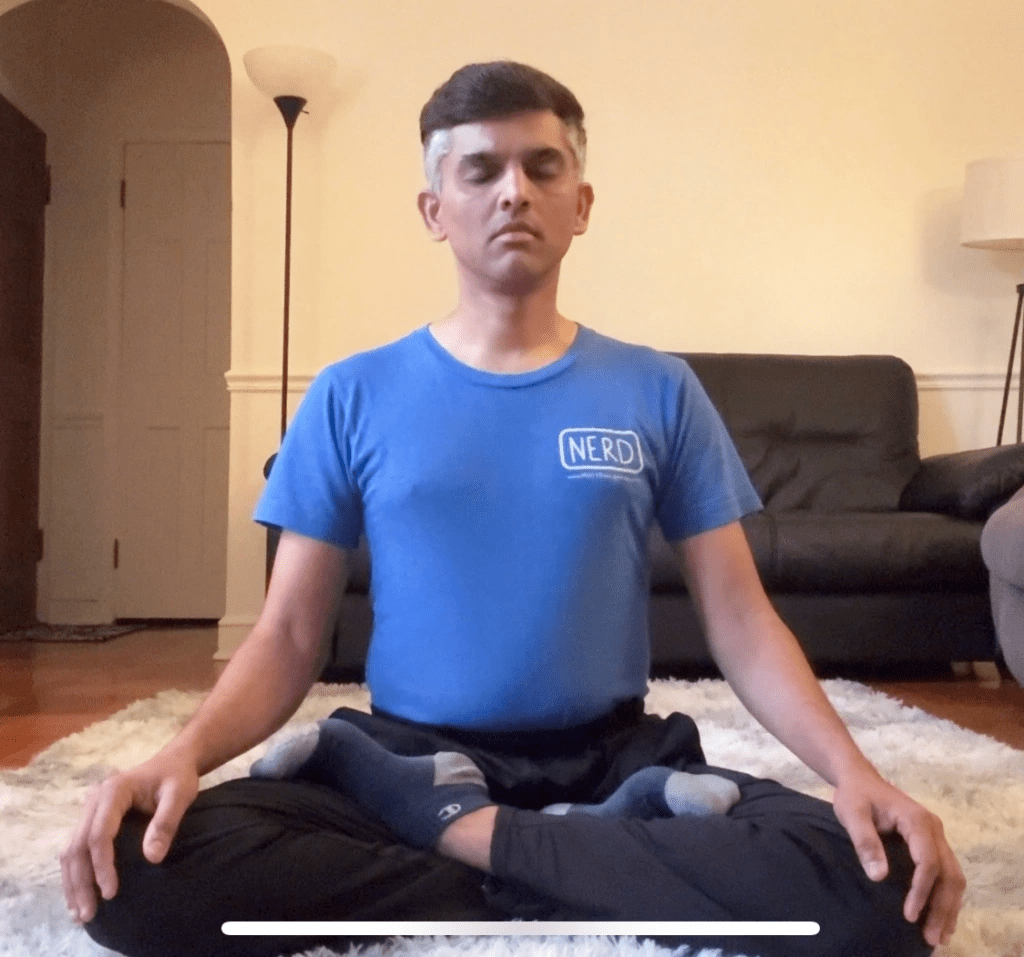
1- Sit comfortably in padmasana (Lotus pose) or sukhasana. Your spine should be erect. Palms on the knees facing upwards or in the chin Mudra and shoulders relaxed. Close your eyes and let your breath be normal.
2- Take a few normal breaths. Bring your attention to breathing. Then take a deep breath in and exhale the air forcefully out of your lungs.
3- Keep doing fast respirations through both nostrils, exhaling rapidly but inhalation should be passive, not active. As described in HYP, inhalation should be the reaction of the forceful exhalation.
4. While doing this practice, keep your facial muscles relaxed.
5- Do 10 exhalations to begin with and then gradually increase the number to 20 and then 50.
As you forcefully exhale, your abdominal muscles contract. Be aware that you are not actively inhaling after the forceful exhalation.
Try and see a shining light in front of your forehead.
If you are feeling dizzy after performing this, then you are exhaling too forcefully. Stop the practice and sit quietly for a few minutes. Awareness is very important during this practice.
After completing the first round, take a deep breathe in and observe the effects of this kriya on your body and mind.
What are the benefits of Kapalbhati?
According to Hath Yog Pradipika, Kapalbhati destroys all mucous disorders. It is also called the destroyer of ‘Kapha’.
The toxins in the upper respiratory tract are thrown out of the body.
It also helps the facial muscles and nerves to relax. According to The Yoga Institute (Mumbai), it also helps rejuvenate tired cells and nerves, so the face looks brighter and younger.
It helps clear sinuses and reduces migraine and sinusitis attacks.
Kapalbhati is an ideal preparation for meditation. Those who wish to achieve progress in meditation should practice Kapalbhati before meditating.
Kapalbhati makes the mind peaceful and receptive.
Hath yogis believe that Ida and Pingla nadis are purified by doing Kapalbhati. (Ida and Pingala are the energy channels. Ida represents ‘the moon’ the para-sympathetic nervous system and Pingala represents the sun’ the sympathetic nervous system)
((Information source of the article: Hath Yoga Pradipika, The Yoga Institute and New Age Yoga))
((This blog is based on my practice of Yoga. Please consult your yoga teacher before attempting this))
 Mayank Bhagwat