Once more, Bollywood actor Soman Kapoor has captured headlines. But it’s not for her latest movie or an upcoming series. Sonam has found herself amidst a social media storm following her recent remarks.
In an interview that went viral on social media, Sonam, the mother of an infant son named Vayu, shared her decision not to introduce ‘Honey’ to her son before he turns one, as it causes Botulism.
Sonam’s remark sparked a massive debate on the social media platform X, and the actor was heavily criticised for questioning the tradition. In a social media post, a user commented, “had an argument with Pandit ji for feeding Honey to newly born child because i don’t believe in these traditions”, like seriously ??? Wokeism at its peak!!.”
Healthcare experts and paediatricians have echoed their strong support for the actor on social media. But is the sweet ‘Honey’ not so healthy for infants? What is Botulism? I tried to find out what the WHO, CDC and the Indian Academy of Paediatrics have to say about feeding honey to infants.
‘I argued with Panditji’
On Thursday, September 27th, Sonam Kapoor’s video surfaced on the social media platform X. In the video, Sonam can be heard sharing her decision not to feed honey to her infant son.
She says, “Whatever books I have read, say in the first year, you cannot give your kid honey because it causes botulism. It’s a disease a child can get, as honey has a specific bacteria.”
The video was then shared and reshared by several social media users.
In an interview, she added, “I had an argument with the pandit ji, that I am giving him apple puree, whether you like it or not, as the first food.”
“There are some old things we do in our culture, which are not, maybe, I know are different. Maybe a lot of moms have done it, and their children are fine. But I was extra precautious,” Sonam stated further.
What is Botulism?
Botulism is a disease caused by bacteria. According to the Center for Disease Control and Prevention( CDC) America’s premiere health-regulatory organisation,
“Botulism is a rare but serious illness caused by a toxin that attacks the body’s nerves and causes difficulty breathing, muscle paralysis, and even death.”
“This toxin is made by Clostridium botulinum and sometimes Clostridium butyricum and Clostridium baratii bacteria. These bacteria can produce the toxin in food, wounds, and the intestines of infants,” the CDC adds further.
Health experts say bacteria that make this toxin are found in many places.
The CDC provides additional information, “These bacteria make spores, which act like protective coatings. Spores help the bacteria survive in the environment, even in extreme conditions. The spores usually do not cause people to become sick, even when they’re eaten. But under certain conditions, these spores can grow and make one of the most lethal toxins known.”
The conditions in which the spores can grow and make toxins are:
- Low-oxygen or no oxygen (anaerobic) environment
- Low acid
- Low sugar
- Low salt
- A certain temperature range
- A certain amount of water
The World Health Organisation says Clostridium botulinum is a bacterium that produces dangerous toxins (botulinum toxins) under low-oxygen conditions. Botulinum toxins are one of the most lethal substances known.
Does Honey cause Botulism?
Nutrition often stands as the most contentious topic among family members and caregivers. And the question that has been a stand-off point is: Is Honey beneficial for infants?
Both the CDC and the WHO have issued warnings to parents and caregivers, advising against feeding honey to children under the age of 12 months.
The CDC says, “Honey can contain the bacteria that cause infant botulism, so do not feed honey to children younger than 12 months. Honey is safe for people one year of age and older.”
But through generations, the sweet golden ‘Honey’ has been fed to infants as it has myriad health benefits. In India, giving honey to infants is a common tradition during the Annaprasan puja. It marks the child’s initial introduction to solid food.
Health experts say delayed breastfeeding and the practice of introducing pre-lacteal and supplementary feeds, such as honey and goat’s milk, are also commonly observed.
The Indian Academy of Paediatrics statement says, “Newborn should not be given any other fluid or food like honey, “ghutti”, animal or powdered milk, tea, water, glucose water, etc. since these are potentially harmful.”
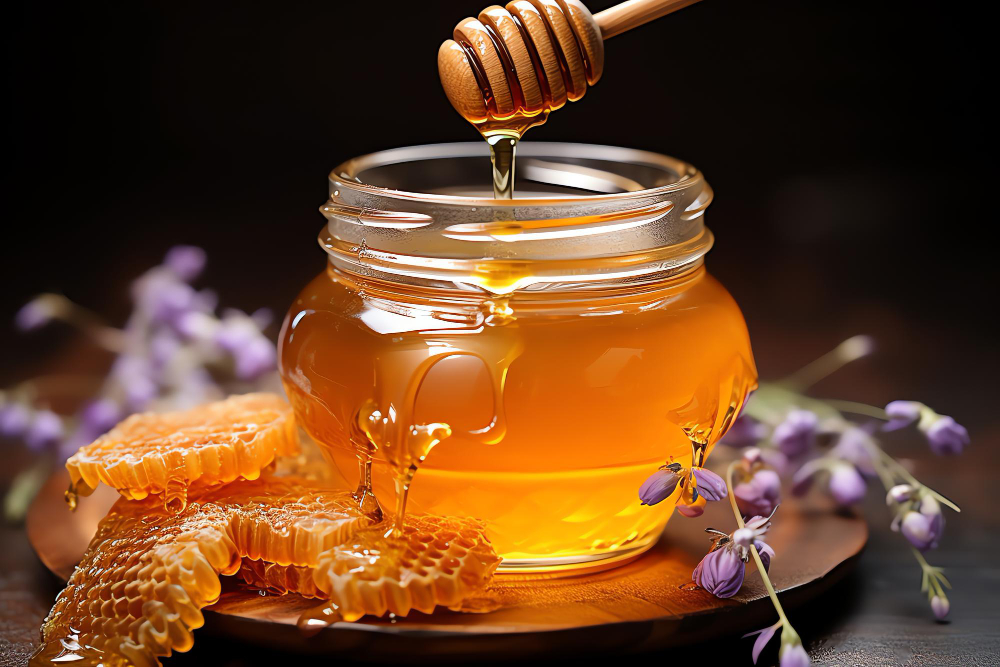
Image by vwalakte
Symptoms of Botulism?
The symptoms of Botulism are not caused by the bacterium itself but by the toxin produced by the bacterium. Symptoms usually appear within 12 to 36 hours (within a minimum and maximum range of 4 hours to 8 days) after exposure.
Signs and symptoms in an infant might include:
- Constipation
- Poor feeding
- Drooping eyelids
- Pupils that are slow to react to light
- Face showing less expression than usual
- Weak cry that sounds different than usual
- Difficulty breathing
((Source-The CDC))
Kinds of Botulism?
There are five different types of Botulism. Infant Botulism, Foodborne Botulism, Wound Botulism, Inhalation Botulism, other types of intoxication and botox. According to the WHO,
Infant Botulism:
Infant botulism occurs mostly in infants under 6 months of age. It occurs when infants ingest C. botulinum spores, which germinate into bacteria that colonize the gut and release toxins. C. botulinum in infants includes constipation, loss of appetite, weakness, an altered cry and a striking loss of head control. Although there are several possible sources of infection for infant botulism, spore-contaminated honey has been associated with a number of cases.
Wound Botulism
Wound botulism is rare and occurs when the spores get into an open wound and are able to reproduce in an anaerobic environment. The symptoms are similar to foodborne botulism but may take up to 2 weeks to appear. This form of the disease has been associated with substance abuse, particularly when injecting black tar heroin.
Foodborne Botulism
Foodborne botulism occurs when C. botulinum grows and produces toxins in food prior to consumption. C. botulinum produces spores and they exist widely in the environment including soil, river and sea water.
The botulinum toxin has been found in a variety of foods, including low-acid preserved vegetables, such as green beans, spinach, mushrooms, and beets; fish, including canned tuna, fermented, salted and smoked fish; and meat products, such as ham and sausage. The food implicated differs between countries and reflects local eating habits and food preservation procedures. Occasionally, commercially prepared foods are involved.
Diagnosis and Treatment
The WHO says diagnosis is usually based on clinical history and clinical examination followed by laboratory confirmation including demonstrating the presence of botulinum toxin in serum, stool or food, or a culture of C. botulinum from stool, wound or food. Misdiagnosis of botulism sometimes occurs as it is often confused with stroke, Guillain-Barré syndrome, or myasthenia gravis.
Antitoxin should be administered as soon as possible after a clinical diagnosis. Early administration is effective in reducing mortality rates.
What health experts say.
Sonam Kapoor was heavily criticised and trolled for questioning the tradition. However, healthcare experts have shown their support to the actor.
Hepatologist and Physician-Scientist Dr. Cyriac Abby Philips, who is known as The Liver Dr, on the social media platform ‘X’ has posted a comment saying,
"Traditions are just peer pressure from dead people." Giving honey to newborns is contraindicated and not recommended in the interest of health of the infant. It can lead to infantile botulism which kills.
https://twitter.com/theliverdr/status/1707306502334358006?s=46
((The information and quote in this article are sourced from WHO, CDC, Indian Academy of Paediatrics, Social Media X))
 Mayank Bhagwat